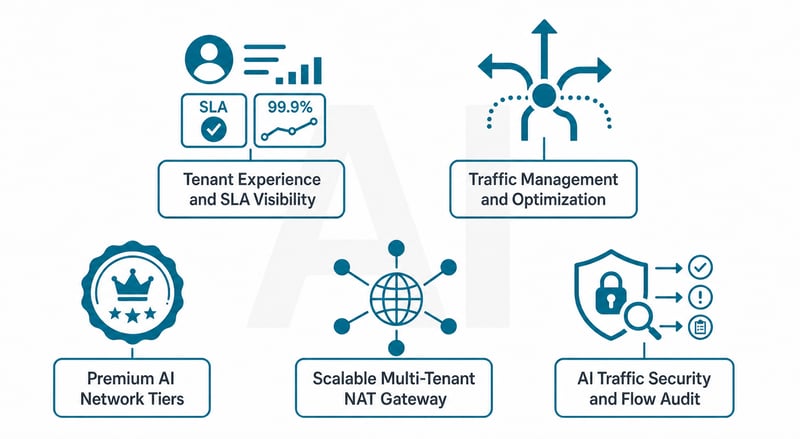



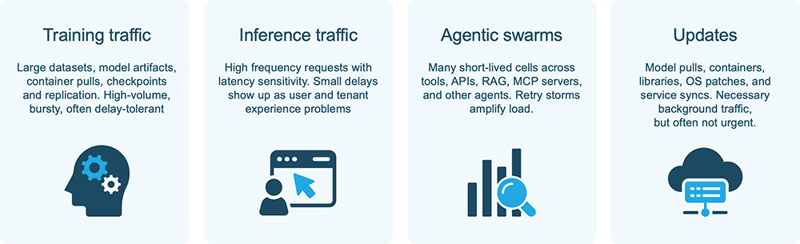
 Training, inference, agents, storage,
 GPUaaS edge networks need to distinguish traffic by workload type, timing profile, tenant priority, SLA sensitivity, and business value. Treating AI traffic as a generic class is how providers overbuild for the wrong problem and under-protect the workloads tenants notice.
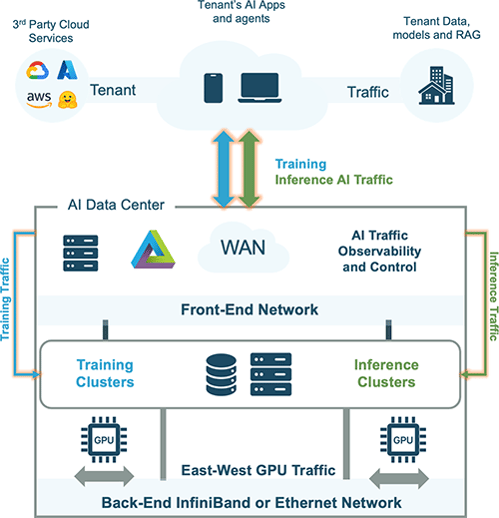
AppLogic Networks focuses on the front-end AI data center network, where ingress and egress traffic can be analyzed, optimized, monetized, and secured. We complement the back-end GPU fabric. We do not claim to process east-west GPU-to-GPU traffic. We make the north-south AI service boundary visible, measurable, policy-driven, and commercially useful.
AppLogic Networks helps AI data centers analyze, optimize, monetize, and secure the north-south traffic feeding every training, inference, agentic, storage, and cloud-service workload.

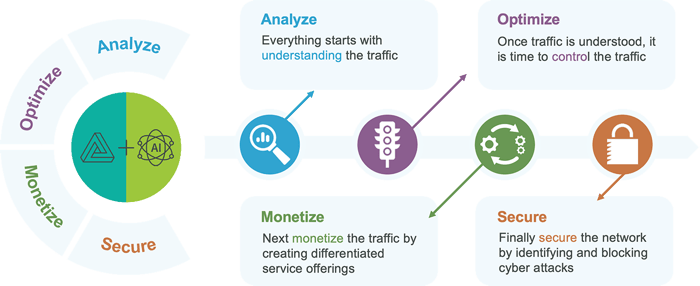 Everything starts with understanding traffic. Once traffic is understood, it can be controlled. Once it can be controlled, it can be packaged. And once it becomes critical to service delivery, it must be secured.
If you have any further questions you wish to ask, or are ready to see a demo of our technology in practice, then contact us below.